


Blog
How Do You Test the Air Quality in Your Home in Rochester, NY?
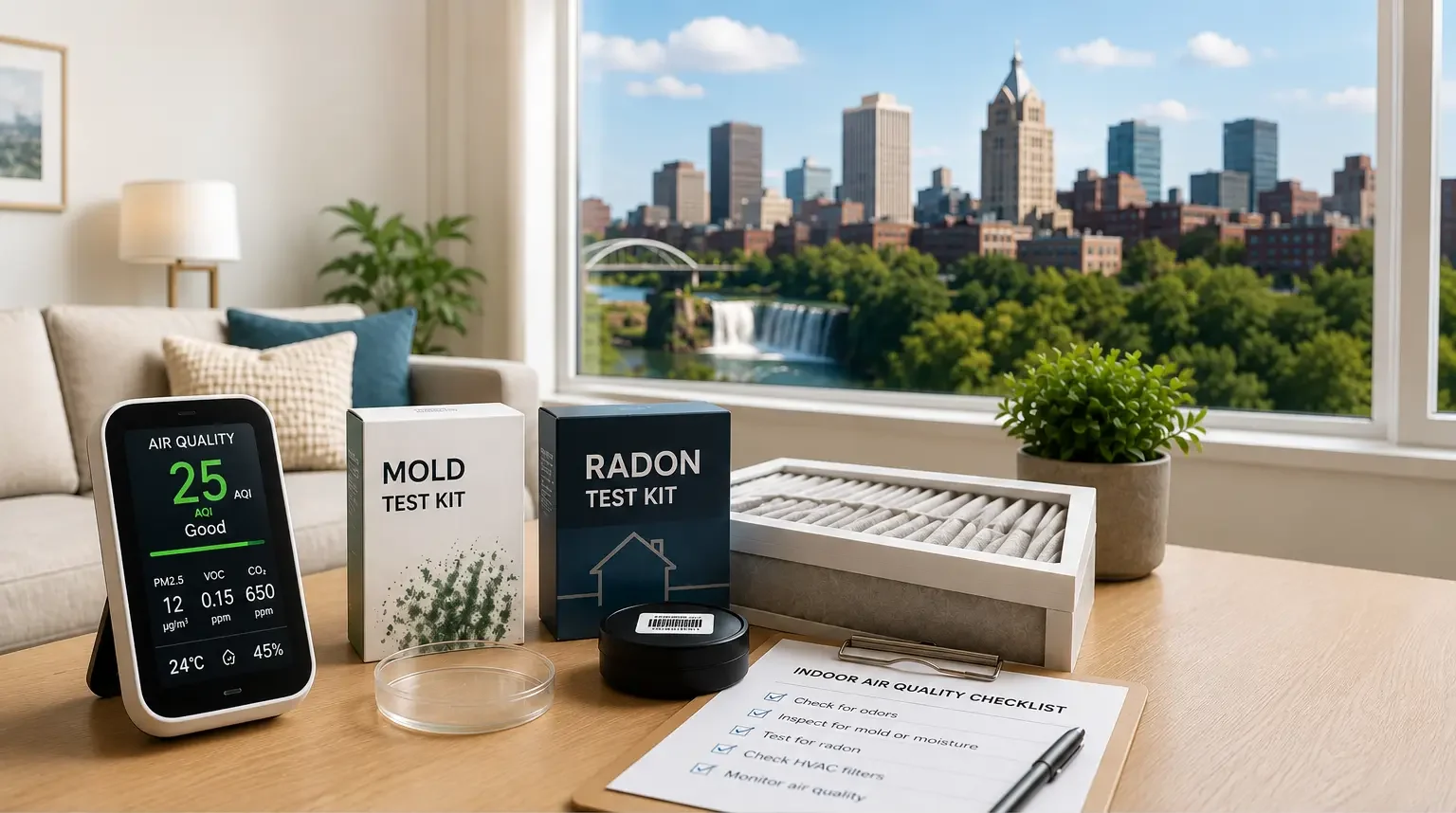
How do you test the air quality in your home? At-home test kits and portable monitors can identify issues such as humidity, VOCs, particulate matter, and radon. Professional testing provides a clearer picture when symptoms persist or results are unclear.
For Rochester homeowners, indoor air concerns change with the seasons. Homes stay tightly sealed during long winters, while summer humidity can contribute to moisture-related problems. Testing helps identify what is affecting the air inside your home so you can take the right steps to improve it.
Why Testing Indoor Air Quality Matters in Rochester, NY
The air inside a home affects comfort and health. Poor indoor conditions can contribute to allergy symptoms, stale odors, excessive dust, and humidity problems.
Rochester's climate creates several unique challenges. Long heating seasons keep windows closed for extended periods, reducing fresh-air exchange. Summer humidity introduces moisture concerns, while older homes throughout Monroe County can experience ventilation issues, dust accumulation, and hidden mold growth.
Common indoor air pollutants found in local homes include:
- Dust and airborne particulates
- Mold spores
- VOCs from household products
- Pet dander
- Combustion byproducts
- Excess humidity
- Radon gas
How to Test Your Home's Air Quality
There is no single air quality test that measures every air pollutant. Different testing methods evaluate issues such as radon, airborne particles, humidity, VOCs, and other contaminants that can affect your home's air quality and your family's health.
Homeowners can check your home's air quality using a quality monitor, air sensors, pollutant monitors, and other indoor air quality testing products. These tools provide useful information about indoor air quality levels and can help identify potential air quality concerns.
For Rochester homeowners, indoor air quality can be affected by long heating seasons, tightly sealed homes, excess humidity, and limited fresh-air exchange. Professional indoor air quality testing provides a more complete evaluation by identifying pollutants, potential sources of contamination, ventilation issues, and moisture-related concerns.
You should consider testing if you notice:
- Persistent odors
- Excessive dust
- Allergy symptoms indoors
- Visible mold
- Condensation or humidity problems
- Unexplained respiratory irritation
- Recent remodeling or renovations
- Concerns about radon exposure
Whether you begin with a quality monitor or schedule professional indoor air quality testing, identifying indoor air pollutants is the first step toward improving indoor comfort and creating a healthier home environment.
Can I Test the Air Quality in My Home Myself?
Yes. Several DIY products are available for homeowners who want a basic understanding of indoor conditions.
Types of DIY Test Kits and Monitors
Common options include:
- Radon test kits
- VOC monitors
- Humidity meters
- Carbon dioxide monitors
- Mold testing kits
- Portable particulate monitors
A quality monitor can provide useful information about changing conditions inside the home, especially during winter when homes remain closed for extended periods.
What Can DIY Tests Detect?
Depending on the device, DIY air quality testing can provide information about several common indoor air quality concerns. Many air quality monitors, air sensors, and other testing products are designed to detect specific air pollutants and measure changing indoor conditions within your home.
Common issues that DIY testing may identify include:
- Radon levels
- Humidity levels
- VOC (volatile organic compound) concentrations
- Carbon dioxide levels
- Airborne particles and dust
- Potential mold concerns
- General indoor air quality levels
A quality monitor can be a useful first step for homeowners who want to check your home's air quality and track changes over time. While these monitors can identify potential pollutants and air quality concerns, they may not always pinpoint the source of the problem. If indoor air quality issues persist, professional air quality testing can provide more detailed information about pollutants, contamination sources, and overall indoor air conditions.
DIY Testing Limitations
DIY tools can identify a problem but often cannot explain the source.
Who Can Test the Air Quality in My Home Professionally?
Professional testing is worthwhile when symptoms persist, odors continue returning, or DIY testing identifies a concern.
Common reasons homeowners seek professional testing include:
- Ongoing allergy symptoms
- Humidity concerns
- Suspected mold
- Poor ventilation
- Recurring dust problems
- Indoor comfort issues
Professional equipment provides a better understanding of what is affecting the air throughout your home.
John Betlem's Professional Indoor Air Quality Testing Services
A professional assessment identifies conditions affecting comfort and indoor air quality.
During an in-home evaluation, technicians assess:
- Humidity levels
- Airflow conditions
- Ventilation performance
- Filtration effectiveness
- Airborne contaminants
- Potential moisture concerns
The results determine which indoor air quality solutions are most appropriate for the home.
Depending on the findings, recommendations may include air filtration services, air cleaners, improved ventilation, or humidity-control equipment.
Common Indoor Air Pollutants Found in Rochester, NY Homes
Mold and Moisture Issues
Mold growth often develops in damp, poorly ventilated areas.
VOCs
Paints, cleaning products, furniture, flooring materials, and household chemicals can release volatile organic compounds into the air.
Pet Dander and Allergens
Pet hair, dander, pollen, and dust mites frequently contribute to indoor comfort concerns.
Combustion Pollutants
Gas-burning appliances can introduce contaminants into the air if venting systems are not functioning properly.
Carbon monoxide detector installation is an important safety upgrade for homes with furnaces, boilers, fireplaces, or other fuel-burning equipment.
Radon
Radon occurs naturally in soil and can enter homes through foundation openings. Testing remains the only way to determine if elevated levels are present.
Solutions to Improve Indoor Air Quality After Testing
Testing identifies the problem. The next step is improving conditions.
Air Purification and Filtration
Advanced filtration and purification systems help reduce airborne contaminants and particulates.
Many homeowners choose an Iwave air purification system to help improve air quality throughout the home.
Humidity Control
A professional dehumidifier installation can help manage excess moisture, while HVAC humidifier installation adds moisture during the heating season.
UV Air Purification
UV purification systems addresses biological contaminants moving through the HVAC system.
Ventilation Improvements
Proper ventilators help improve fresh-air exchange and reduce stale indoor conditions.
Get Answers About Your Home's Air Quality
Testing is the first step toward understanding what is affecting the air inside your home. If you are dealing with allergies, excessive dust, humidity concerns, odors, or indoor comfort issues, John Betlem Heating & Cooling can help identify the cause and recommend practical solutions.
Schedule Online or Call (585) 357-0415 to book an indoor air quality evaluation.
Schedule OnlineFrequently Asked Questions
You can check your home's air quality with portable monitors, DIY test kits, humidity meters, and professional testing services. Professional testing can identify concerns that many DIY tools miss.
Common signs include excessive dust, lingering odors, allergy symptoms, headaches, visible mold, humidity problems, and respiratory irritation.
Many home testing products provide useful information, but accuracy varies depending on the pollutant being measured and the quality of the device.
Testing is often recommended when symptoms develop, after renovations, when moisture issues appear, or when noticeable changes occur in indoor conditions.
Homeowners can purchase mold test kits, but professional testing typically provides more comprehensive information about airborne mold levels and potential sources of moisture.