


Ductwork Repair
Ductwork Repair in Rochester, NY and the Surrounding Area
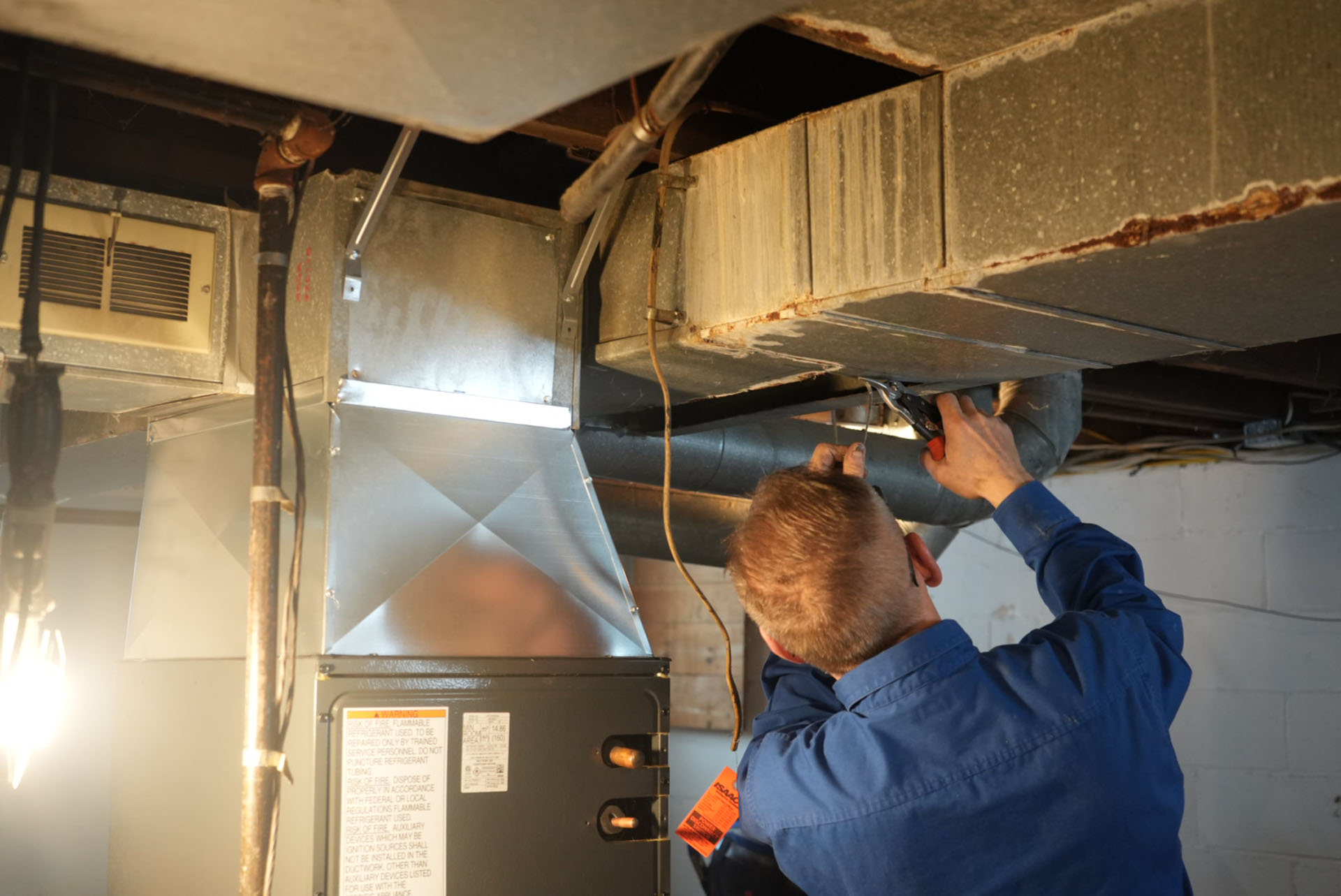
Ductwork is unseen, but vital for delivering heated and cooled air throughout your home. When your ductwork is in need of repair, much of that conditioned air is being lost – and that results in decreased home comfort and an increase in your utility bills. When your ductwork is working as a perfect conduit between your home comfort equipment and your living spaces, you’ll enjoy improved comfort and better energy savings.
Schedule OnlineCommon Ductwork Problems We Repair
Rochester’s mix of older housing stock, unconditioned attics, and damp basements puts real strain on ductwork, especially through our long heating season. Loose joints, crushed flex duct, and gaps where sections were never properly connected are some of the most common issues we find during a ductwork repair visit, and left alone they quietly drain efficiency from an otherwise healthy furnace or AC system.
Signs Your Ductwork Needs Repair
Uneven temperatures from room to room, especially between finished basements and upper floors, are often the first sign of a leak or disconnected duct rather than a problem with the equipment itself. Other signs to watch for include rising heating and cooling bills without a change in usage, a noticeable increase in dust around vents and registers, whistling or rattling sounds when the system runs, and musty odors that point to moisture collecting inside ducts that pass through unheated crawl spaces or attics. If a room hasn’t felt right no matter how you adjust the thermostat, disconnected or leaking ductwork is worth ruling out before replacing any equipment.
The average home loses 20–30% of its conditioned air through duct leaks — and the U.S. Department of Energy says that figure can reach 40% in worst-case systems.
Source: ENERGY STAR / U.S. DOE, energystar.gov/saveathome/heating-cooling/duct-sealing, 2026
Air Duct Leak Repair & Sealing (Mastic Sealant, HVAC Foil Tape)
Once we’ve located the leaks, usually at seams, joints, and connections rather than mid-run, we don’t rely on standard cloth duct tape, which dries out and peels away within a year or two, especially in the temperature swings typical of a Rochester attic. Instead, we clean each surface and apply mastic sealant, a brush- or trowel-applied compound that cures into a flexible, airtight seal at every joint, and use HVAC-rated foil tape on accessible seams where mastic isn’t practical. For ductwork running through unconditioned spaces, we’ll also check insulation after sealing, since a well-sealed duct that’s poorly insulated can still lose heat or invite condensation. The result is a duct system that delivers the air your furnace or AC actually produces, instead of losing it in the attic.
ENERGY STAR recommends sealing duct leaks with mastic sealant or metal (foil) tape — never standard duct tape, which fails over time — with vent and register connections being the most common leak points.
Source: ENERGY STAR Duct Sealing brochure, energystar.gov/saveathome/heating-cooling/duct-sealing, 2026
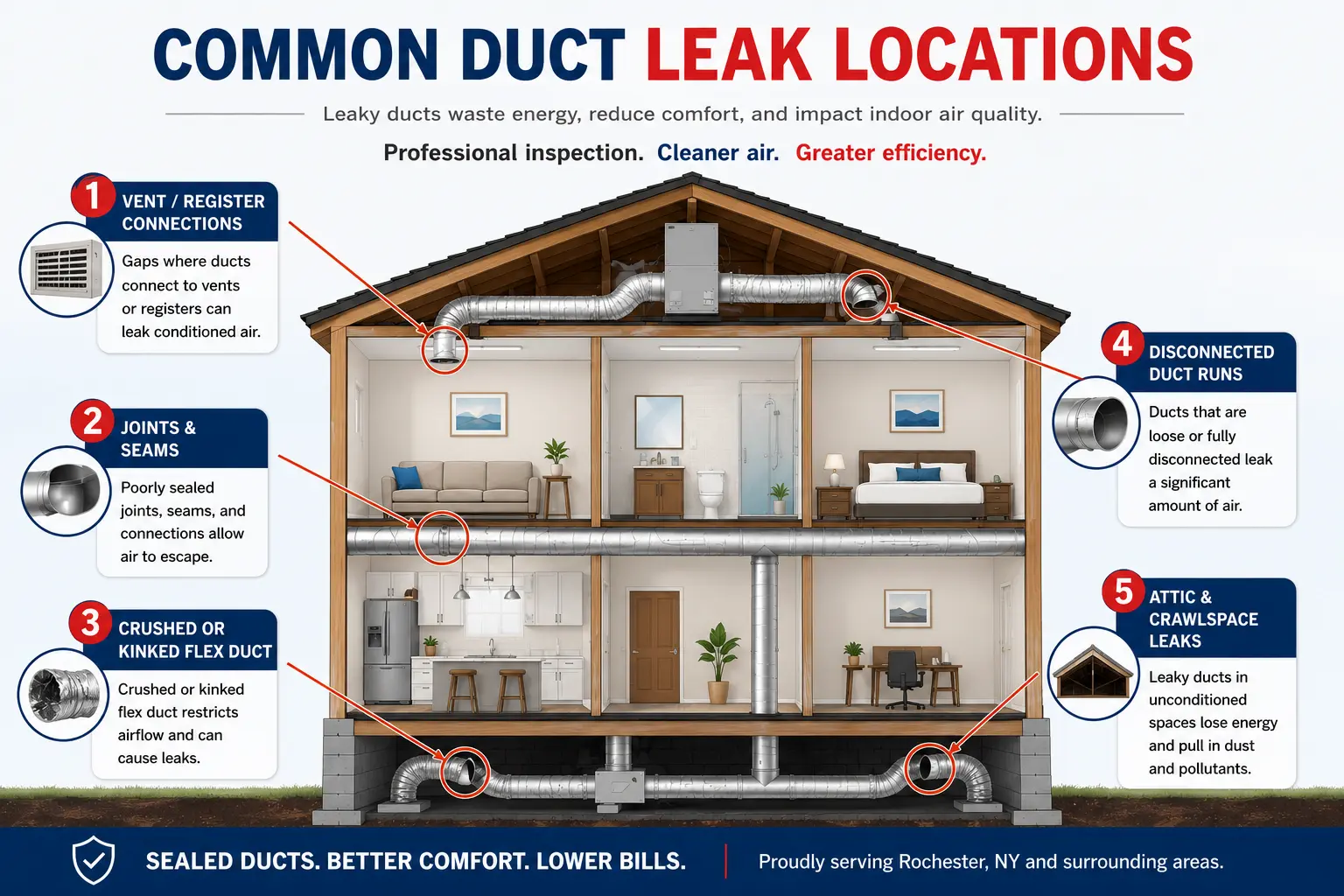
Ducts leaking just 20% of conditioned air can make your HVAC system work up to 50% harder — and the DOE says duct leakage adds hundreds of dollars a year to heating and cooling bills.
Source: U.S. Department of Energy / GreenBuildingAdvisor, 2026
Our Diagnostic Process for Air Duct Leaks
We start with a visual walkthrough of every accessible section: attic, basement, and crawl space, since that’s where we most often find the damage. A lot of homes in neighborhoods like Irondequoit, Greece, and Penfield were built decades ago and have had additions, finished attics, or converted garages tacked on since, which usually means the original ductwork was extended rather than redesigned. Those tie-in points are where we see the most leaks and disconnects. From there, we take a static pressure reading at the air handler to see how hard the system is working to push air through the ducts, and to physically locate leaks that aren’t visible to the eye. In finished spaces where we can’t see the ductwork directly, a thermal imaging camera helps us spot temperature differences at wall and ceiling cavities that point to a hidden leak or missing insulation.
Repair vs. Full Duct Replacement: How We Decide What's Best for Your Cooling System
Most of what we find can be repaired: sealed joints, reconnected sections, replaced flex duct where it’s crushed or torn. We lean toward full replacement when the ductwork is original to a much older home and made of unlined sheet metal that’s rusted or undersized for a modern system, when damage is spread across most of the run rather than isolated to a few joints, or when you’re already planning a new furnace or AC and the existing ducts weren’t sized correctly for it in the first place. If we can get you another decade out of well-sealed, well-insulated ductwork, we’ll say so. If patching one more leak just means you’ll be back to square one next winter, we’ll tell you that too.
John Betlem can provide expert ductwork repair in your Rochester, NY home.
When you count on John Betlem Heating & Cooling, Inc. for the ductwork repair you need in your Rochester, NY home, you’re counting on experts who want to help you and your family enjoy the best possible home comfort. Our expert technicians have the right tools and technology to find trouble spots in your home’s ductwork, and to make the repairs you need to enjoy optimal home comfort and energy efficiency. Plus, when you work with John Betlem for your home comfort needs, you’ll enjoy a comprehensive listing of home comfort services, including:
- Air Quality
- Air Cleaners
- Dehumidification
- Ultra Violet UV Purification
- iWave® Air Purification
- Filtration
- HRV/ERV
- Humidifiers
- Carbon Monoxide
- Ventilators
We back everything we do with our 100% satisfaction guarantee when you choose John Betlem Heating & Cooling, Inc. to contract your job. Compare our guarantee with the limitations, fine print and exclusions other companies tend to use to back their work – others will typically guarantee only the functionality of the equipment, not your satisfaction with the process or that the finished job meets your expectations. This is why John Betlem Heating & Cooling continues growing, with more satisfied customers year after year.
Improving the comfort of your Rochester, NY area home is as easy as making a call to John Betlem Heating & Cooling, Inc. We can help you get the ductwork repair you need so that you and your family can experience the best in home comfort. Simply give us a call at (585) 357-0415 and we will be more than happy to help you with any home comfort service need you may have.
Schedule Online
Frequently Asked Questions
Yes, ductwork can be repaired using methods such as sealing leaks with mastic sealant or HVAC foil tape, replacing damaged sections, and reinforcing loose connections. Common ductwork repair techniques focus on improving airflow efficiency and indoor air quality through proper duct sealing and insulation.
To fix damaged ducts, begin by locating leaks or gaps using tools such as a smoke pencil or thermal imaging. Small leaks can be sealed with mastic sealant or HVAC foil tape. If duct sections are crushed or severely damaged, they may need to be replaced. Professional HVAC technicians often use inspection cameras and pressure testing to verify proper airflow and system efficiency.
The 2 foot rule for ducts refers to guidelines for supporting flexible ductwork so it does not sag excessively. Flexible ducts should be supported regularly to prevent airflow restriction, with limited sag between supports to maintain efficient air movement. Proper duct support is important during ductwork repair and HVAC system maintenance.
Replacing ductwork can be worthwhile when ventilation systems are old, leaking, or poorly designed. New ductwork can improve HVAC performance, increase indoor comfort, enhance air quality, and reduce energy costs. HVAC professionals may use calculations and airflow testing to determine whether repair or full replacement is the best option.
Ductwork typically lasts between 20 and 25 years depending on material quality, maintenance, and environmental conditions. Over time ducts may develop leaks, corrosion, or insulation damage that reduces efficiency and may require repair or replacement.
Fixing ductwork can range from simple to complex depending on the issue. Minor problems like sealing small leaks with mastic sealant or HVAC foil tape may be manageable for homeowners. Larger repairs involving flexible ducts, metal duct systems, or major airflow problems usually require professional HVAC service.
Signs of bad ductwork include uneven airflow between rooms, higher energy bills, excessive dust buildup, or unusual odors when the HVAC system runs. These issues may indicate leaks, poor insulation, or disconnected duct sections that require inspection and repair.
To repair rusted air ducts, turn off the HVAC system and inspect the affected areas for corrosion. Surface rust can be removed with a wire brush before applying HVAC-grade sealant or mastic. If corrosion is severe, the damaged duct section may need to be replaced with new galvanized steel ductwork.

Home Energy Upgrades


Interested in Financing?
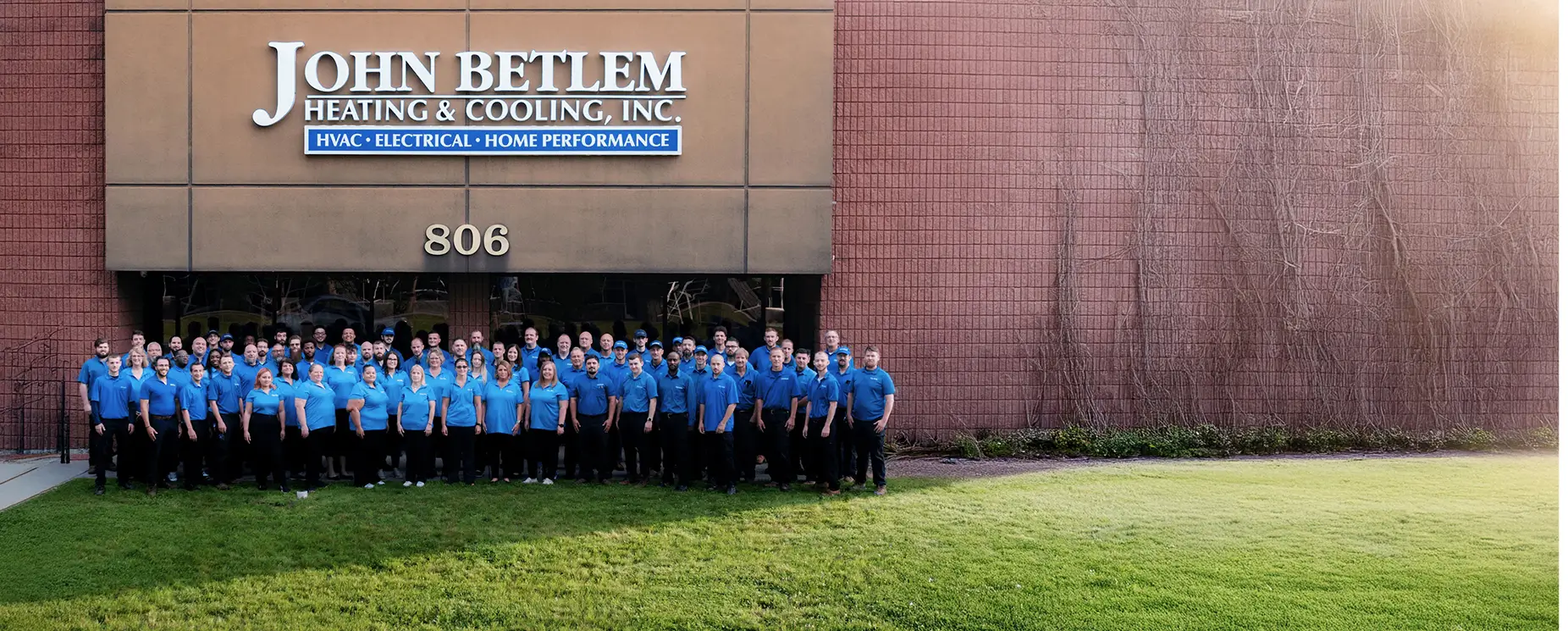
The John Betlem Difference





What Our Customers Are SAying